Renacao Website v3

Cacao farming optimized for profitability and resilience.

Second-generation farmingThe next step for cacao.

Cacao is where coffee and citrus stood a generation ago: a sector about to grow up. What has been missing is a way to run the farm as one system, enabling scale and sustainable production.

Traditional

Small plots, old trees, unpredictable harvests.

  • Unsustainable for farmers
  • Unsustainable for the forest
  • Unsustainable for a growing supply chain

First generation

The pioneers of scale.

  • Proved it could be done
  • Showed what the next step needs

Second generation

Built on those lessons.

  • Planned on field data, designed for the site
  • Run as one system, lot by lot
  • Structured so everyone wins
  • Sustainability at its core

Read the concept

Where we come inWho we work with, and how.

Second-generation practice reaches a farm in one of two ways. Either it is applied to a farm or a plan that already exists, or the farm is built that way from the first hectare. The work below is the same discipline, entered at a different point.

Advisory — An independent second opinion.

A farm, a plan or a supply decision, looked at from the outside.

  • Numbers rebuilt from field data, not re-read
  • What would have to change, ranked by impact
  • The findings are yours whatever you decide next

See the four services

Development — A farm built from the ground up.

A farm that does not exist yet, taken from land to production.

  • Custom land screening and project design
  • Planting and post-harvest designed around the site
  • Run by us until the team on the ground can run it

See how development works

Our experienceWe know, because we have done it.

We built and ran one of the first large-scale agroforestry cacao operations of its kind, and now advise on new projects and on improving running farms.
Our experience

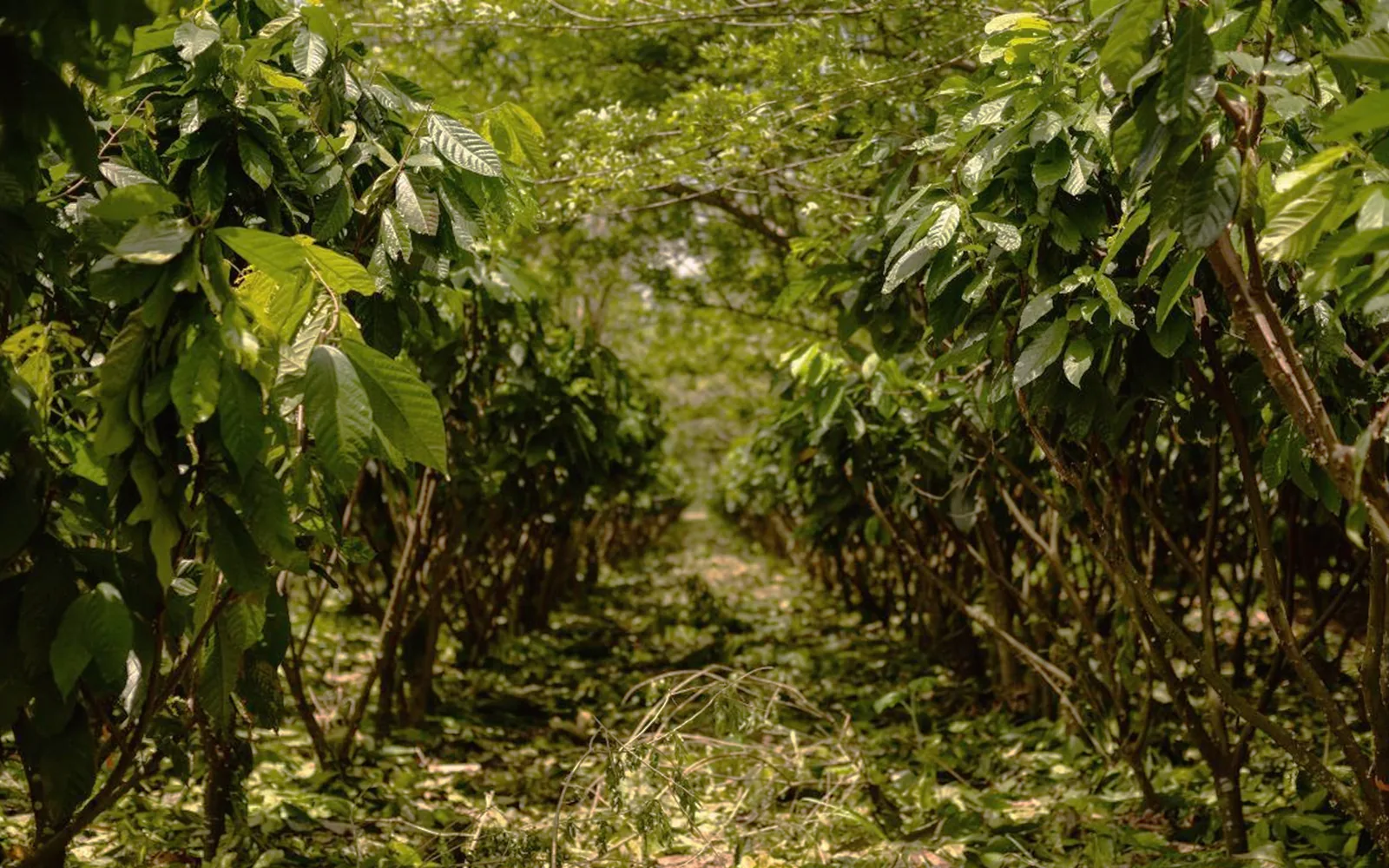
Inside a mature cacao planting, looking down the row

Start with one question.

Tell us the question. We propose the smallest engagement that answers it — the quickest way to find out whether we are useful to you. Most of our work grows from there.
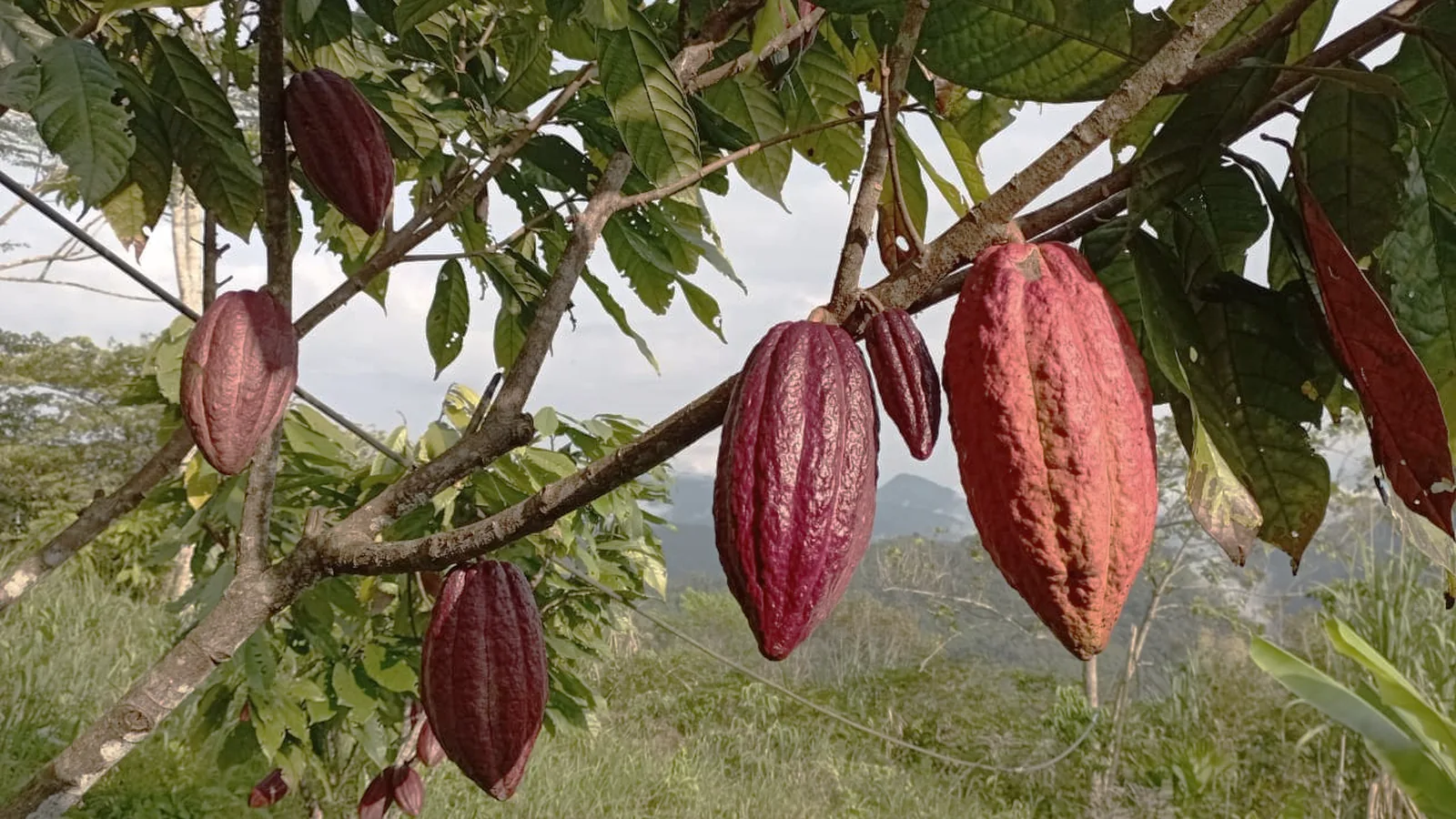
Second-generation cacao farming.

Built on first-generation experience, and optimized for profitability and resilience.

Why cacao is uniqueMore room to improve than any other tree crop.

Like any tree crop, cacao takes years to mature and depends on dozens of internal and external factors that interact. What sets it apart is history, not biology. Cacao is an orphan crop, grown mostly by smallholders, with few standards or benchmarks. The complexity is the same, but the playbook was missing.

Three generations of cacaoAn industry growing up.

The traditional modelUnsustainable on every front.

Low incomes, old trees, lost forest and unpredictable supply are the same model running out of road.

Unsustainable for farmers

Poverty incomes
Low yields, old trees
Child labor and migration

Unsustainable for the planet

Growth by clearing forest
Climate and disease pressure
Regulation closing in

Unsustainable for buyers

Demand keeps growing
Unpredictable supply
Volatile prices, uneven quality

The first generationProved it, and showed what it takes.

The first large-scale, professionally run cacao farms were built over the past decade. Their lessons are the foundation of the second generation.

What they proved

  • Yields several times above tradition
  • Standards-based supply, deforestation-free and living-wage
  • Institutional capital into the sector for the first time — private equity, strategic buyers, DFIs

What they showed

  • A farm is run lot by lot, because same-age lots do not behave the same
  • People are the key resource: trained, stable teams lift yield and lower cost per tonne
  • Structure matters as much as agronomy

The second generationBuilt for profitability and resilience.

Two goals: a farm that earns, and a farm that keeps earning. Seven principles get it there — two apply to every decision, five to the daily work.

Yield per hectare Cost per tonne Yr 0Yr 1Yr 2Yr 3Yr 4Yr 5Yr 6Yr 7+ Yield per hectare Cost per tonne
Illustrative. Cost per tonne falls as yield ramps up and fixed costs spread over more tonnes.

Start with one question.

Tell us the question. We propose the smallest engagement that answers it, for a farm being planned or one already running, and go as far as the answer takes us.

Second-generation thinking, applied to your farm.

Know where a farm or a plan gains or loses money, and what fixing it is worth. Independent advice for owners, investors and chocolate makers.

What we doFour services improving profitability and resilience.

Each engagement stands on its own, and you keep the findings. Here are some examples of each.

Business plan and structure
  • A business plan built on field data before capital is raised
  • A joint-venture structure read line by line before signing
  • Every layer between farm and buyer counted in cost per tonne

Outcome: a bankable plan and a broken-down cost per tonne

Farm design and performance
  • A farm below plan: which lots carry the gap, and what closes it
  • A sponsor’s plan rebuilt lot by lot before an investment committee

Outcome: a plan to close the yield gap, valued per hectare

Post-harvest and quality
  • Fermentation at capacity in the peak month: what to mechanize first
  • Batch variation the buyer rejects, priced per tonne to fix
  • Offtake contracts secured, so every tonne has a buyer

Outcome: consistent batches the buyer accepts

Outgrower programs
  • Outgrower volume promised but never delivered, tested in the field
  • Traceability checked before a deforestation-free commitment

Outcome: volume and compliance you can rely on

Our processFrom a question to a plan, in four steps.

Scope and price are agreed before we start. Some engagements are desk-based, others include field work — each service says which.

1
Diagnose
  • Data, site visit and interviews
  • Lot-level yields, costs, quality, structure and fees
2
Quantify
  • Each lever valued in cost per tonne and revenue per hectare
  • A downside case set beside the base case
3
Redesign
  • Operations, post-harvest, design or structure
  • Only where the numbers say it pays
4
Structure
  • Contracts, fees, governance and reporting
  • Built to keep the gains and attract capital

Common problemsWhat usually turns up, in a farm and in a plan.

If any of these sounds familiar, there is something to find.

A farm in the ground

  • Best lots well above the farm average, a gap that sits inside the farm, not outside it
  • Pruning, nutrition and harvest slipping outside their windows, taking yield with them
  • Quality that varies batch to batch, already noticed by the buyer
  • Post-harvest at capacity in the one month that decides the season

A project on paper

  • Best-lot yields applied to the whole farm
  • One ramp-up curve whatever the planting date
  • Post-harvest sized on the annual average, not on the peak month
  • Fee layers that never reach the cost per tonne
A lot of cacao trees approaching harvest

Start with one question.

A farm or plan review, a post-harvest study, a fee-structure review. Each stands on its own, and each is a way in rather than the limit of the work.

A second-generation cacao farm of your own.

Own a cacao farm and secure consistent, traceable supply without becoming a farmer.
We find the land, design and build it, then run it until it runs without us.

What we doFrom a plan to a resilient and profitable farm that runs itself.

We can lead the whole process or support your own team at any single step, from validating a business plan to running the mature farm.

1
Business plan
  • Farm model, capex, opex and cash needs
  • Downside case and key risks
  • Management team and governance structure
  • Key contracts: investors and lenders, operations (if needed), and offtake

Milestone: capital committed

2
Land
  • Legal title and permits
  • Water, soils and cadmium
  • The local labor pool
  • Deforestation history

Milestone: go/no-go after due diligence, title secured

3
Design
  • Drainage, roads and plot sizes
  • Irrigation, genetics and planting sequence
  • Post-harvest sized for the peak month
  • The labor pool validated, not assumed

Milestone: design and budget signed off

4
Build and plant
  • Nursery and planting material
  • Infrastructure and planting sequence
  • Staffing and training of the farm team
  • In-house, or contracted from an operator

Milestone: planting complete, survival confirmed

5
Manage and supervise
  • Plans, standards and targets
  • Reporting and supervision of the farm team
  • Risks anticipated, problems solved on the ground
  • For as long as you want us there

Milestones: first harvest around yr 3, break-even around yr 5, full production from yr 7

Before plantingPlanting yearsFirst harvests onward

Common issuesWhere cacao projects usually go wrong.

Land bought before it is properly screened

Screening comes first. Most land does not pass, and that is the point.

Drainage and plot length set wrong at the start

Neither can easily be corrected once the trees are in the ground, so both are designed from site data first.

A labor pool assumed

A labor influx management plan is set before planting: sourcing, housing and community impact.

Planting material chosen on price or availability

Genetics come first, because they fix the yield ceiling for the life of the farm.

Teams that run short at the peaks

A skilled, trained team keeps operations smooth when the window is narrow.

Problems found too late to fix cheaply

Risks are anticipated and problems solved on the ground, from first harvest to full production and beyond.

A cautionary taleStacked fees can eat the farm.

In many cacao projects, several parties each take a fee between the farm and the investor or buyer. We structure every project to avoid it.

Trader or intermediary marginAdvisory and arrangement feesFund management fee and carryJoint venture or co-operator shareHolding company costsOperator incentive feeOperator base feeSite overheadsDirect farm costsLayers above the farmeach can look reasonable on its own;together they can erase the cost advantagethat justified building the farmWhere the cost advantage is createdand the only layers that grow cacao, thoughmargins can hide here too, in marked-up inputsor services billed to the farm by related partiesIllustrative, not to scale. Not every project has every layer, and some layers are legitimate.

The end stateA farm that can run without us.

We lead while the farm is designed, planted and staffed, then step back as its team proves itself. You are never locked in.

1. BuildBefore planting to first harvests Renacao leads 2. TransferRamp-up Renacao manages, team executes 3. SuperviseFrom maturity, as long as wanted Team runs, Renacao supervises 4. IndependentOptional, at the owner's choice Team runs independently Renacao involvementFarm team responsibility
Illustrative shares of day-to-day responsibility. Phases move on when agreed criteria are met — people, standards, results and accountability — not on a fixed calendar.
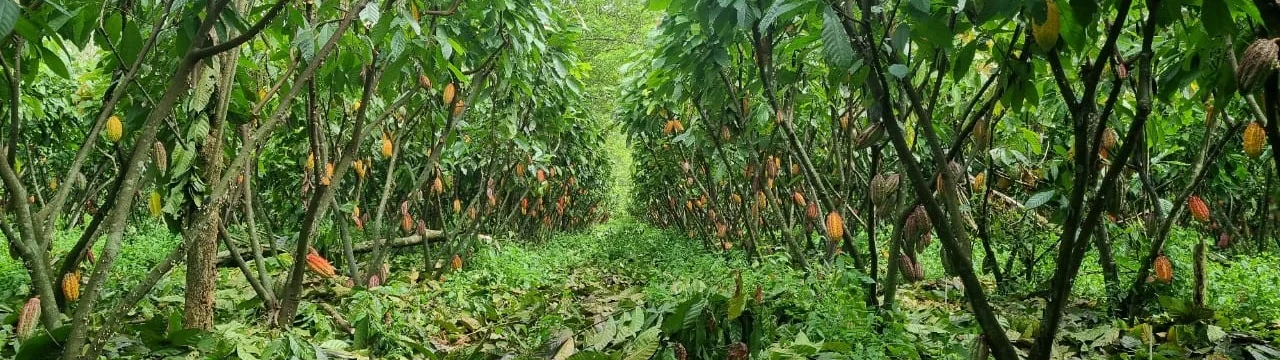
Inside a cacao row, pods ripening on both sides

Start with one question.

A make-or-buy study, a conversion case for your land, or a project teaser. Each stands on its own, and any of them can lead to the whole build.

We know, because we have done it.

The founding team of one of the first large-scale agroforestry cacao operations of its kind, from first land to more than 2,000 financed hectares.

How we workIndependent, with depth on call.

We work independently and draw on a network of experts whenever a question needs more depth. Four aspects guide every engagement.

Across every engagement, at every step

Field data over potentialtargets from what farms deliver, with a downside case
Clear about what works at scaleand what it takes to get there
Independent, in writingno obligation to hire us; you own the findings
Depth on callengineers, agronomists, E&S specialists, directed by us

What we builtDesigned, financed, built and run, at scale.

Operations

  • 2,000+ ha of agroforestry cacao developed, among the largest of its kind
  • Above 2 t/ha reached by mature cohorts, later plantings doing better
  • Labor-heavy tasks mechanized, from the field to post-harvesting and supervision

Sustainability

  • VCS and CCB carbon credits issued, the first for large-scale cacao agroforestry
  • Husk and pulp upcycled into energy, fertilizer and pulp-based products
  • Hundreds of formal, living-wage jobs, benchmarked by a third party

Governance

  • 5 institutional backers: private equity, a chocolate major, a leading trader, two DFIs
  • About 800 smallholders integrated in three hubs through joint ventures with farmer associations
  • One playbook of operating, reporting and sustainability systems for any farm

Advisory workPutting it to work.

Large-scale irrigated farm and project design
Vertical integration program for a chocolatier
Post-harvest for an origin
Land screening for a new project
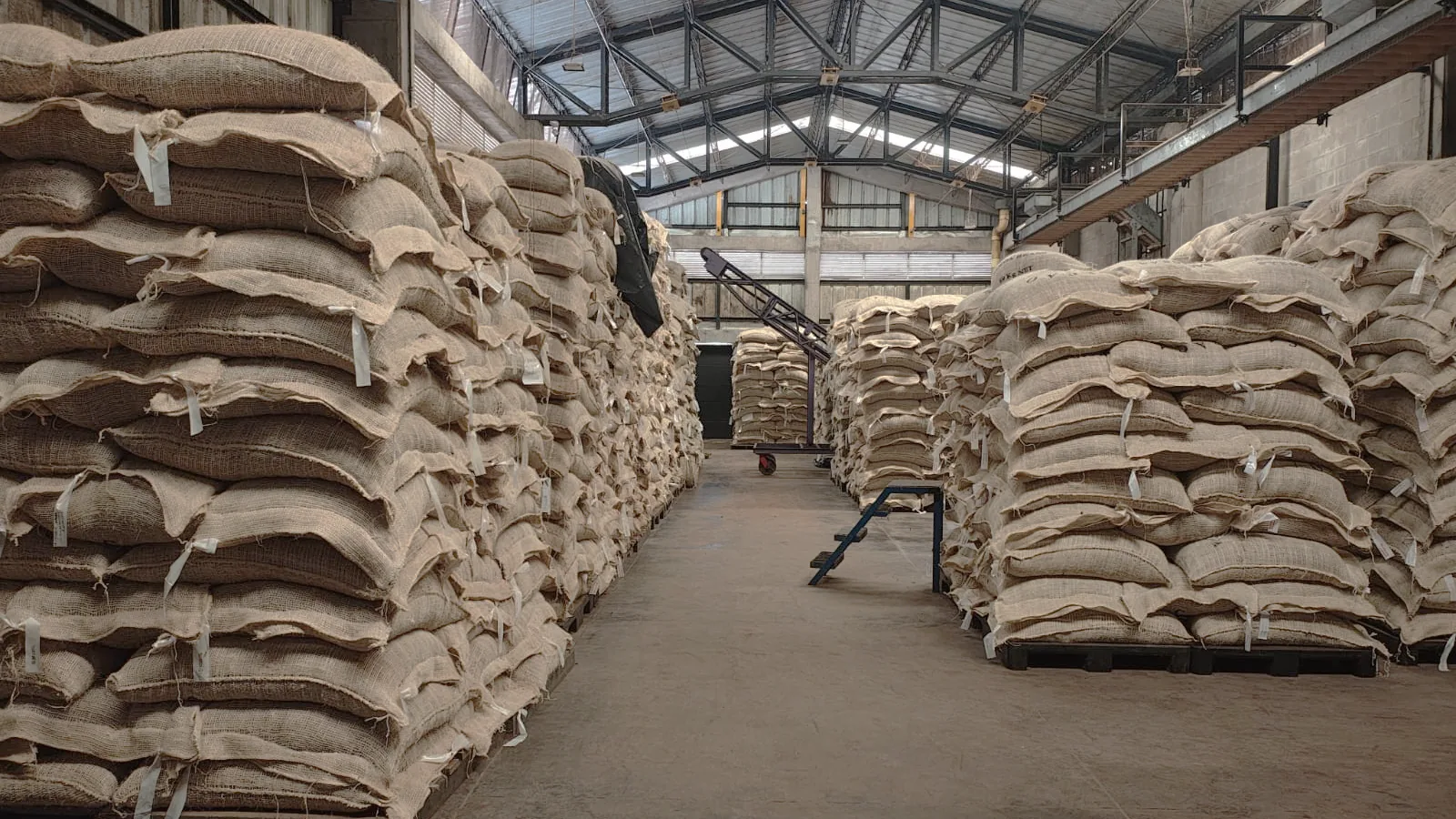
Jute sacks of dried cacao stacked in the farm store

Start with one question.

Tell us the question. We propose the smallest engagement that answers it, and go as far as the answer takes us.